When my son turned one, peace packed up and left the house.
Yes, literally.
This little human doesn’t nap, doesn’t stay still, and if he’s not trying to scale a chair, he’s trying to get into the kitchen — which, in my view, is the most dangerous place on earth for a toddler.
If he’s not there, he’s busy scattering clothes, throwing shoes from shelves, or plotting an escape from the house like a mini Houdini.
And then there’s Cocomelon. Oh, Cocomelon.🤦♂️
If he had his way, that show would run 24/7. But no — I’m not letting YouTube raise my child.
So the question becomes: what do you do with a one-year-old who never seems to sleep, always wants to be on the move,
and still expects you to clap for him while you’re trying to get some work done or just catch a quick nap?
Here are some sanity-saving activities that have helped me manage my restless little tornado — without screens:
Jump to an activity:
1. Laundry Basket Adventures ·
2. Pretend Play with Hammer ·
2. Plastic Container Drawer ·
3. Cloth Chaos Corner ·
4. Obstacle Course Fun ·
5. Outdoor Explorer Time ·
6. Sticky Note Play ·
7. Bubble Time ·
8. Water Play ·
9. Quiet Box for Mama’s Break
1. Laundry Basket Adventures
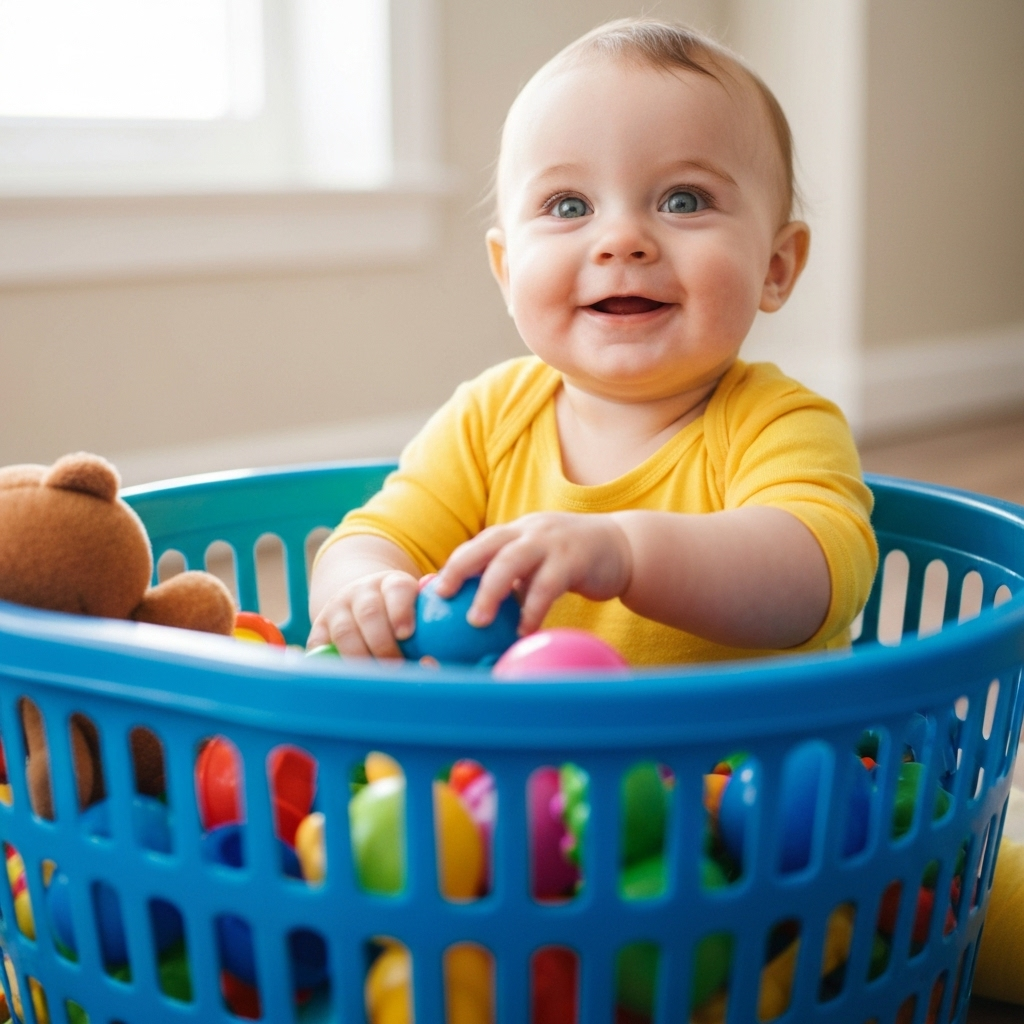
Throw some soft toys, balls, or blocks into a laundry basket and let your baby pull them out, one by one. He’ll love the “unpacking,” and you’ll love the 10 minutes of peace. Sometimes I even push him around the house in the basket pretending it’s a car — complete with sound effects, because apparently I’m also one year old. Works like magic, every single time, even on the days he’s refused literally everything else.
What you’ll need: An empty laundry basket, 5–6 soft toys or fabric blocks (nothing with small parts).
Why it works: Pulling objects out one at a time builds fine motor grip and hand-eye coordination, and the repetitive “in and out” motion is genuinely soothing for toddlers who are otherwise all over the place — it gives that restless energy a job to do.
Try this variation: For a younger one-year-old (12–15 months), stick to 3–4 items so it doesn’t get overwhelming. For an older toddler pushing two, add a “sorting” twist — one basket for toys, one for socks — and turn it into their first tidying-up game (they won’t know that’s what’s happening).
1.2. Pretend Play with Hammer

When I am in the house on weekends, I will at most times get to work on broken tables, squeaky door hinges and other house fixtures that need some reworking. Roches like copying me and so I have gotten him this pretend play tool box full of hammers and plastic screws so that he too can work on his toys.
And it is so cute seeing him hammering around on his blocks wearing his work apron.
2. Plastic Container Drawer
Forget expensive toys. I emptied one of my kitchen drawers (the lowest one, obviously) and filled it with plastic cups, spoons, and containers. He opens it, explores, bangs things together, stacks a cup on his head like a hat — and crucially, stays away from the actually dangerous drawers with the knives and the pans he’s not ready for.
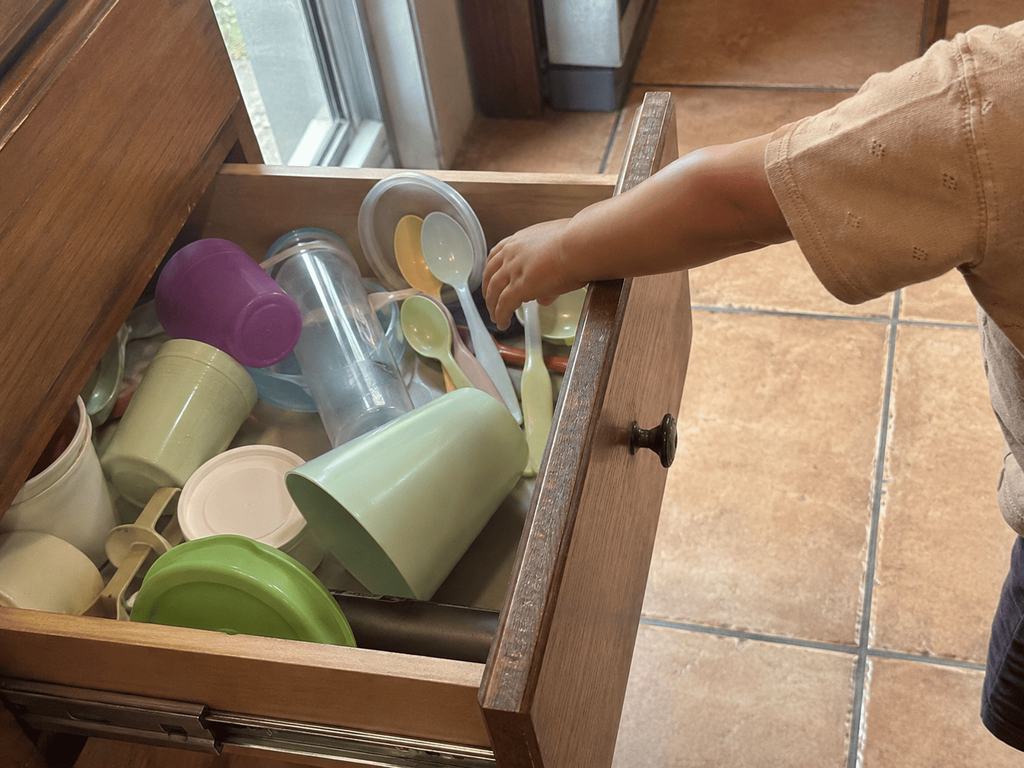
What you’ll need: One low kitchen drawer, 5–8 plastic cups/containers/lids of different sizes.
Why it works: Banging, stacking, and nesting containers teaches cause-and-effect and spatial awareness — this is basically a free Montessori “sensory drawer” without spending a cent. The noise is annoying for about a week, then you stop hearing it.
Try this variation: Rotate the contents weekly so it stays “new.” If your toddler is close to two, add containers with lids they have to figure out how to open — it slows them down and stretches the play time considerably.
3. Cloth Chaos Corner
Since he’s obsessed with pulling clothes off shelves, I gave him his own mini laundry basket with a few old baby clothes he’s allowed to destroy. He can throw, fold (or attempt to), wear a onesie as a hat, and scatter all he wants. It keeps him busy, and — this is the important part — my actual folded clothes stay untouched on the actual shelf.
What you’ll need: A small basket, 4–5 old baby clothes items you don’t mind getting wrinkled.
Why it works: This one’s less about learning and more about redirection — giving a “yes” space for a behavior he’s going to do anyway (pulling things off shelves) means fewer battles and more time for both of you. It also quietly introduces the idea of folding, even if right now “folding” means balling a shirt into a tight little knot.
Try this variation: Once he’s a bit older, turn it into a matching game — pairing socks or matching shirt colors — for a light early-learning boost.
4. Obstacle Course Fun
I make tiny indoor obstacle courses with pillows, cushions, and tunnels made out of chairs draped with a blanket. He climbs, crawls, and rolls around while burning off that endless energy. Perfect for rainy days when going outside isn’t an option and the walls are starting to close in on both of us.
What you’ll need: 3–4 couch cushions, a blanket, 2 chairs for a tunnel.
Why it works: Climbing over and crawling under things builds gross motor strength and body awareness (knowing where their body is in space) — skills that matter for walking confidently, and later for things like sitting still at a table. Tired toddlers also nap better, which is really the secret win here.
Try this variation: Add a “finish line” toy at the end for younger toddlers who need a clear goal. For a more advanced toddler, string 3–4 obstacles together into a proper mini-course they have to complete in order.
5. Outdoor Explorer Time
When he starts pacing at the door wanting to “go out,” I let him. We go for short walks, collect leaves, or chase after butterflies he’ll never actually catch. He gets tired, I get my cardio — win-win. Just keep a close eye, because one-year-olds have zero concept of danger and will happily walk straight into a hedge, a puddle, or oncoming traffic with the same enthusiasm.
What you’ll need: Nothing but 15–20 minutes and comfortable shoes.
Why it works: Time outdoors is one of the strongest, most researched boosts for a toddler’s focus, mood regulation, and language development — every leaf, ant, and bird is a new word for them to hear and eventually say. It’s also just a reliable mood reset for both of you when the house has gotten too small.
Try this variation: Turn it into a simple scavenger hunt once they understand a bit more — “find something red,” “find something round” — which stretches a short walk into a much longer activity.
6. Sticky Note Play
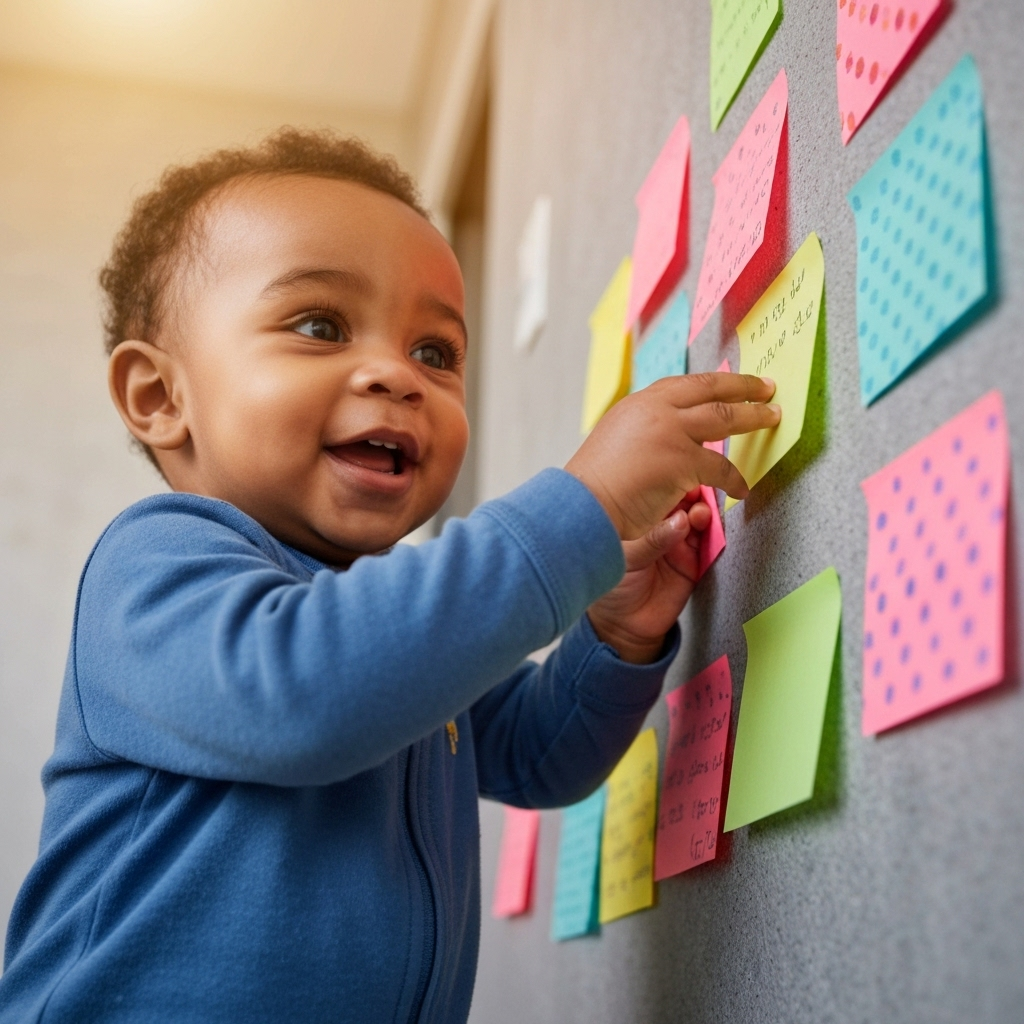
Stick colorful sticky notes on the wall and let him peel them off, one by one, with the intense concentration of a tiny surgeon. He loves it, and I sneak in a few emails in peace — which, at this stage of parenting, counts as a productive afternoon.
What you’ll need: A pad of sticky notes, a clean wall or door at his height.
Why it works: Peeling requires a pincer grip — the same fine motor skill used later for holding a pencil — so this is quietly setting up pre-writing hand strength while looking like nothing more than mess-making.
Try this variation: Write or draw simple shapes/colors on each note and name them as he peels — an easy way to fold in some early color and shape recognition without it feeling like a lesson.
7. Bubble Time
Bubbles never fail. Even on his crankiest days, bubbles bring instant smiles. I blow them, he pops them, shrieking every single time like it’s the first time he’s ever seen a bubble in his life — and after 15 minutes of squealing joy, he’s usually ready for a snack or a nap (on good days).
What you’ll need: A bottle of bubble solution — homemade with dish soap and water works fine too.
Why it works: Chasing and popping bubbles builds hand-eye coordination and gross motor control, and the anticipation-and-pop rhythm is genuinely great for emotional regulation — it’s hard to stay cranky mid-bubble-chase.
Try this variation: Do this outdoors when possible; less soapy residue on your floor, and the extra space means more room to run.
8. Water Play
Set up a small basin or sink with a bit of water and a few plastic cups. Let him splash, pour, and play while you watch nearby, ready to intervene the second it turns into a full bathroom flood. It’s messy — but honestly, better a wet floor than a broken TV or a trip to the kitchen stove.
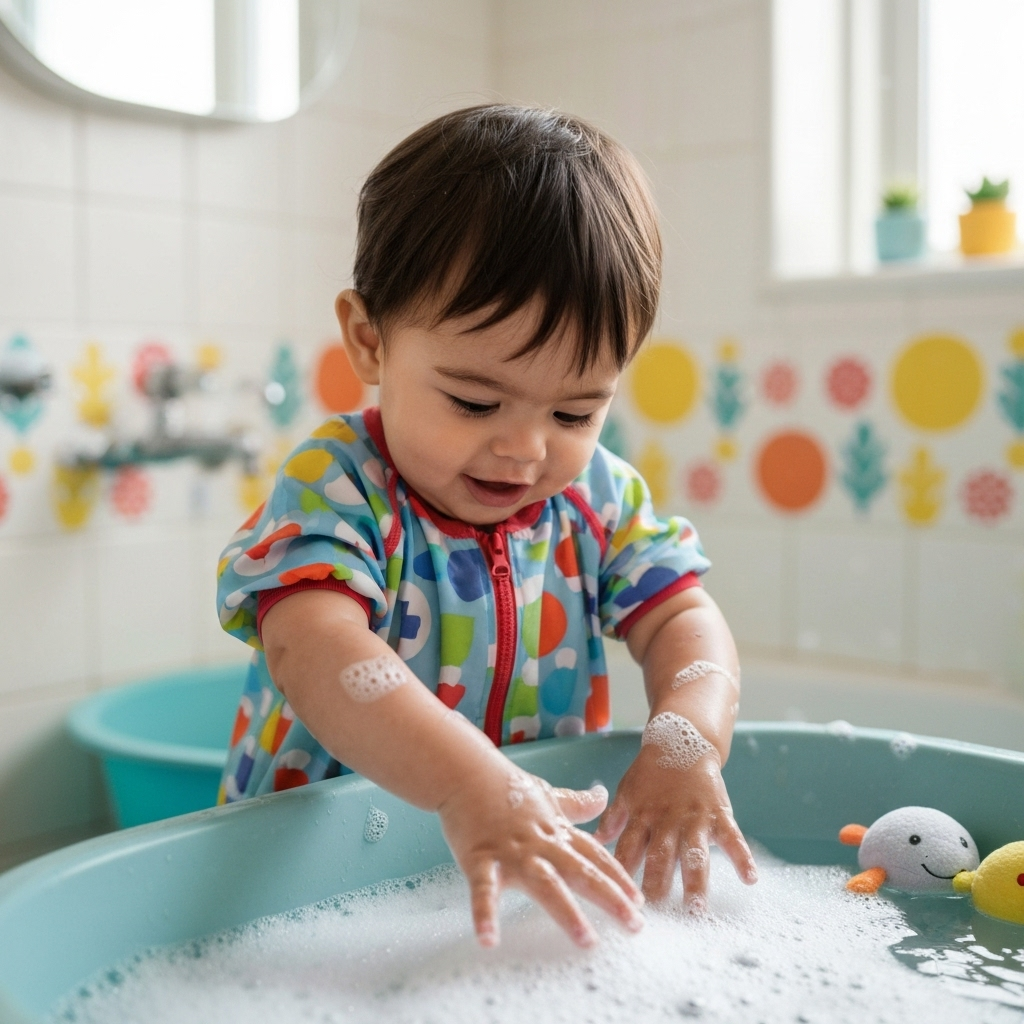
What you’ll need: A shallow basin, a few plastic cups of different sizes, a towel nearby (you’ll need it).
Why it works: Pouring water between cups teaches early cause-and-effect and concentration skills, and the sensory feel of water is calming for a lot of toddlers who otherwise struggle to settle.
Try this variation: Add a drop of food coloring or a few floating toys to extend interest for an older toddler who’s already mastered basic pouring.
9. Quiet Box for Mama’s Break
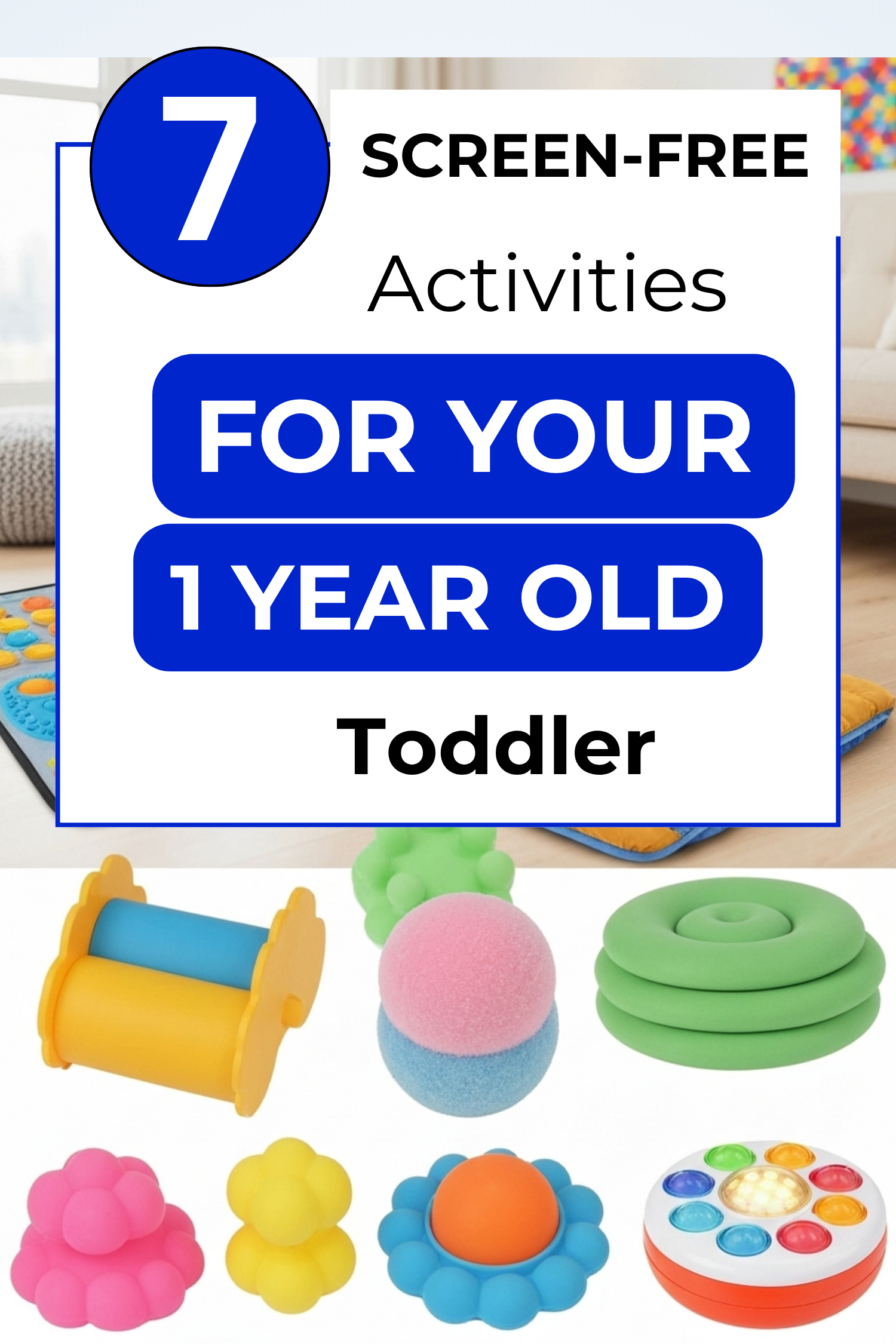
I keep a small “quiet box” filled with sensory toys — squishy balls, textured fabric, wooden blocks — for when I desperately need to work or tend to the other kids. He sits next to me, exploring the box with total focus, while I type like my life depends on it, because it kind of does.
What you’ll need: A shoebox or small bin, 4–5 varied-texture sensory items.
Why it works: Novelty and texture variety hold a toddler’s attention longer than a single toy would, and having a dedicated “special box” that only comes out sometimes makes it feel new every time, which buys you more focused minutes than you’d expect.
Try this variation: Swap 1–2 items out weekly rather than the whole box — keeps it fresh without you having to constantly source new toys.
Quick Questions
How long should screen-free play sessions be for a 1-year-old?
Anywhere from 10–20 minutes of focused play is realistic at this age — don’t aim for longer, aim for more frequent short sessions throughout the day.
What if my toddler won’t sit still for any activity?
Some days that’s just where they are — lean into gross-motor activities (obstacle course, outdoor time) instead of forcing quieter ones, and try the calmer activities right after they’ve burned off energy, not before.
Do these activities help with speech development too?
Yes — narrating what’s happening during any of these (“we’re pouring water,” “the bubble popped”) is one of the simplest ways to build vocabulary, even during play that isn’t specifically language-focused.