Pre-k age is a whole different beast from the baby stage.
They’re not just wandering around grabbing things anymore — they’re asking a hundred questions a day, counting everything in sight, negotiating bedtime like tiny lawyers, and somehow still finding the energy to run laps around the living room at 7pm.
Some days I genuinely don’t know where they get the energy from. I need a nap just watching.
But this stage is also a goldmine for learning through play — because at this age, everything is a game. Counting, naming, running, drawing, mixing things in bowls… it’s all just “fun” to them, even when it’s quietly building language, math, and motor skills.
So here’s what’s actually worked in my house — organized into language, math, movement, art, and science, because that’s genuinely how our days end up looking whether I plan it or not.
🗣️ Language Activities
1. “What’s This Called?” Tours
Honestly, we do this one without even trying anymore. We’ll be walking through the kitchen and I’ll just start pointing — “What’s this? What color is it? What do we use it for?” Some days it turns into a full 20-minute tour of the house, other days they get bored after the fridge. Either way, I let them lead half the time and quiz me instead — they love catching me “getting it wrong” on purpose.
2. Naming Everything in a Picture Book
We’ve got a couple of well-worn picture books at this point (the corners are basically gone), and we’ll flip through and name everything on the page — the dog, the tree, the little bird hiding in the corner. I always try to sneak in “What do you think happens next?” because that’s when they really start thinking, not just naming.
3. Singing Songs (Yes, With a Little YouTube Help)
I’ll be honest — I’m not against screens entirely, just against them replacing everything else. So when it comes to songs, I’ll pull up YouTube for a few minutes to get Baby Shark, The Ants Go Marching, Peekaboo, or Old MacDonald Had a Farm going, and then we sing and do the actions together, on repeat, until I know the words in my sleep. The screen is just there for the tune — the actual singing, clapping, and silly voices are all us.
4. Take-Turns Storytelling
We take turns adding one sentence each to a made-up story. It usually starts sensible (“Once there was a dog”) and ends somewhere completely ridiculous (“…and then the dog flew to the moon and ate all the stars”). I’ve learned to just go with it. Every “what happens next?” gets them thinking harder than any worksheet would.
5. The Feelings Game
We sit in front of a mirror or flip through a few feelings flashcards and act out happy, sad, angry, surprised — the whole range. Then I’ll ask, “Can you remember a time you felt like this?” and honestly some of the answers surprise me. It’s a small thing, but it opens up real conversations.
🔢 Math Activities
6. Counting Pegs, Buttons, and Random Toy Cars
We keep a little tin of buttons and clothespins around (don’t ask why — it just happened), and counting them out loud together has become a genuine favorite. I let them physically move each one into a pile as they count — there’s something about touching each item that makes the numbers stick better than just counting in the air.
7. Sorting by Color or Size
I’ll dump a pile of mixed toys on the floor and ask them to sort it out — by color, by size, whatever they feel like that day. The best part is asking why something belongs in a group. Sometimes the logic makes zero sense to me, and sometimes it’s genuinely impressive.
8. Number Scavenger Hunt Around the House
“Can you find the number 5 somewhere in this room?” sends them off checking the clock, the remote, the calendar on the wall — anywhere. It’s a five-minute game that somehow works every single time.
9. Counting Steps, Claps, and Bites
Stairs, claps, bites of food at dinner — we count everything. Sometimes they set the challenge themselves: “How many claps before you count to 10?” and it turns into a genuine competition.
🏃 Movement Activities
10. Backyard (or Living Room) Races
We line up at one end of the room, I let them shout “Ready, set, go!”, and off we go. I lose on purpose more often than I’d like to admit — the celebration afterward is worth it every time.
11. Jumping Like Different Animals
Frog jumps, bunny hops, kangaroo bounces — we do them all, usually while I’m trying not to pull a muscle. I’ll ask them to invent a new jump for me to copy, which somehow always ends in some jump that defies physics.
12. “Help Me Arrange This” Games
Shoes by size, books stacked up, toys lined up by color — I hand over the “job” and let them own it completely. It’s not really tidying at that point, it’s just play that happens to leave the room looking better.
13. Simon Says
A classic for a reason. After a couple of rounds I hand over the “Simon” role, and giving instructions turns out to be just as good for them as following them.
14. Indoor Football With Cushion Goals
Two cushions, a soft ball, and suddenly we’ve got a full match going in the living room. I play defense on purpose so they have to actually think about how to get the ball past me — keeps it from being too easy.
15. Clean-Up Races Against the Clock
“Can you get all the blocks away before I count to 20?” This one is basically cheating — I get a tidy floor, and they think they’ve won a competition. Everyone wins.
🎨 Art Activities
16. Toilet Paper Roll Creations
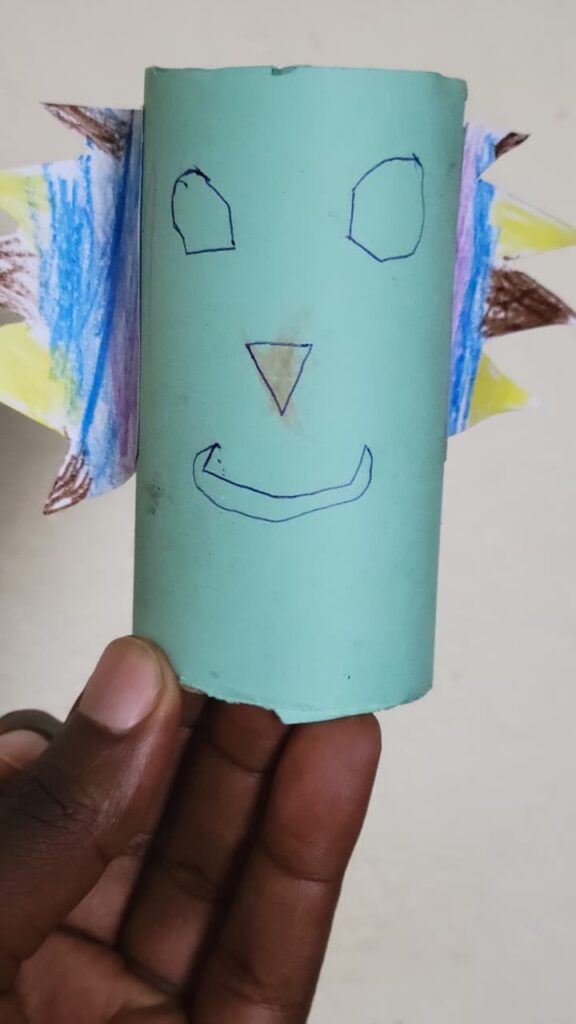
We’ve made everything from binoculars to rockets to weird little animals like butterflies out of empty toilet paper rolls. I let them decide what it’s going to be first — sometimes I have no idea what we’re making until it’s halfway done.
17. Newspaper Collages and Hats
Old newspaper, glue, and a bit of paint go a long way. I always let them tear the paper themselves rather than cutting it for them — tearing builds up hand strength, and honestly, it’s oddly satisfying for them too. And one of the nicest newspaper crafts that I have found so far is making a city in the night. One just needs old newspapers, A4 printing paper, scissors, glue stick and you are good to go.
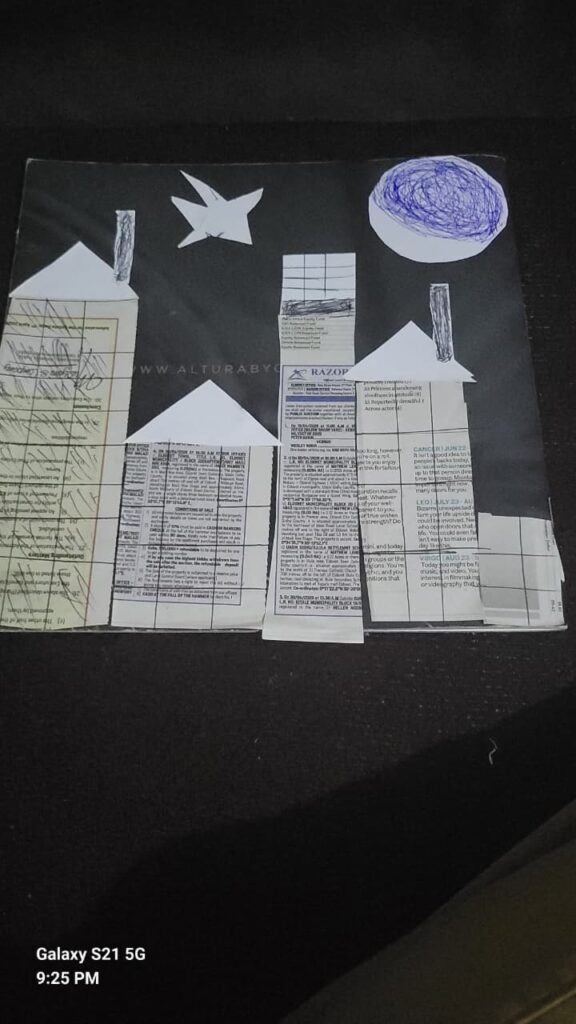
18. Simple Origami
We’re nowhere near fancy — a paper boat or a simple hat is about our speed. I fold alongside them one step at a time instead of doing it for them, even when it’s slower than I’d like.
19. Paper Squishies
This one’s become a proper favorite in our house — draw a shape (an emoji, a food, whatever they’re into that week), color it, cut it out, and stuff it with cotton to make a soft little squishy toy. I let them pick the design and do as much of the cutting and stuffing as they can manage. If you want the full step-by-step, I actually wrote up our whole paper squishy process here.
🔬 Science Activities
20. “Helping” Wash Utensils
Plastic cups and spoons in a basin of soapy water, and suddenly I’ve got a very committed little dishwasher. We talk about what floats, what sinks, and what happens to the bubbles — it’s a full science lesson disguised as a chore, and it buys me a few quiet minutes too.
21. Homemade Playdough
Flour, salt, water, and food coloring — we mix it up together every time rather than me pre-making it. Letting them measure and pour (even messily) turns it into its own little activity before the playdough is even ready.
22. Harmless Slime
We keep it simple and non-toxic, and honestly the questions during slime time are the best part — “Is it sticky? Does it stretch? What happens if we add more water?” I ask, they experiment, we both end up covered in it.
23. Kinetic Sand Play
A tray of kinetic sand and a few cookie cutters can buy a genuinely peaceful 20 minutes. I’ll ask them to describe how it feels compared to regular sand — the answers are usually more thoughtful than I expect.
A Few Things I’ve Learned Along the Way
- Let them choose. The activities they pick themselves always hold their attention longer than the ones I plan out.
- Talk through everything, even the boring parts. Narrating what we’re doing (“You’re stacking the red block on top!”) sneaks in language practice even during chores.
- Keep it short. Ten to fifteen minutes per activity is usually the sweet spot before attention drifts.
- Praise the effort, not just the finished thing. “You worked so hard on that!” lands better than commenting on how it turned out.
- Repeat the favorites — a lot. If they want to do the same squishy or the same song for the fifth day running, let them. Repetition is basically how this age group learns anything.
This stage is loud, messy, and honestly a little exhausting some days. But watching them count their own buttons, name their own feelings, or proudly show off a squishy they made themselves? That’s the good stuff. Screen-free, low-prep, and somehow still the highlight of my day more often than not.